
Revenue falling or stalling
Fewer qualified opportunities?
Find the constraint. Move the business.
Revenue falling or flat, margins under pressure, a process that is too slow: we start from one clear outcome, follow the real work and test the causes before trying a focused change — then we measure its effect.

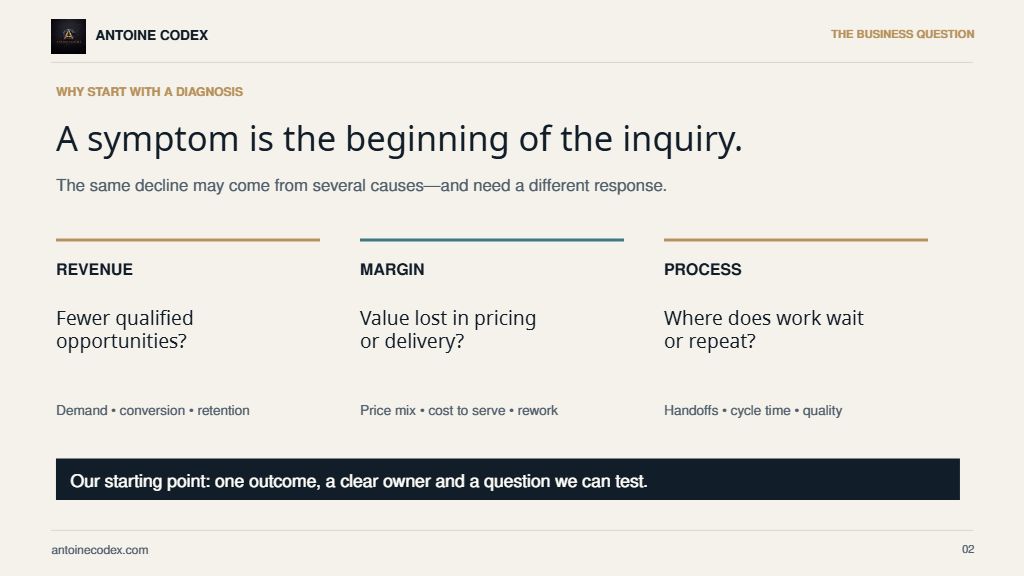
A symptom is the beginning of the inquiry. The same decline may come from several causes — and need a different response.
Fewer qualified opportunities?
Value lost in pricing or delivery?
Where does work wait or repeat?
Our starting point: one outcome, a clear owner and a question we can test.
The full engagement, step by step: Business Assessment & Growth Strategy.
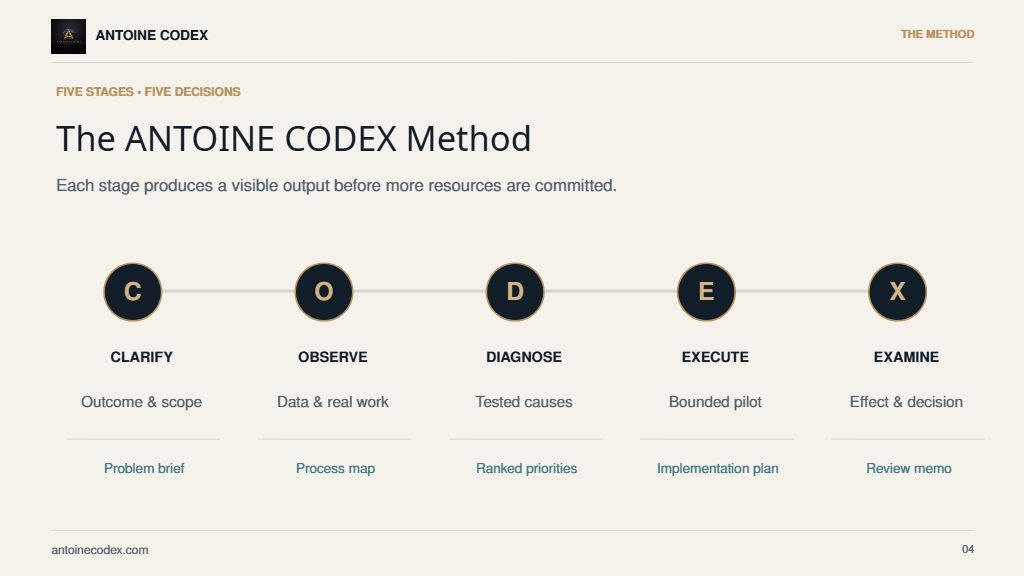
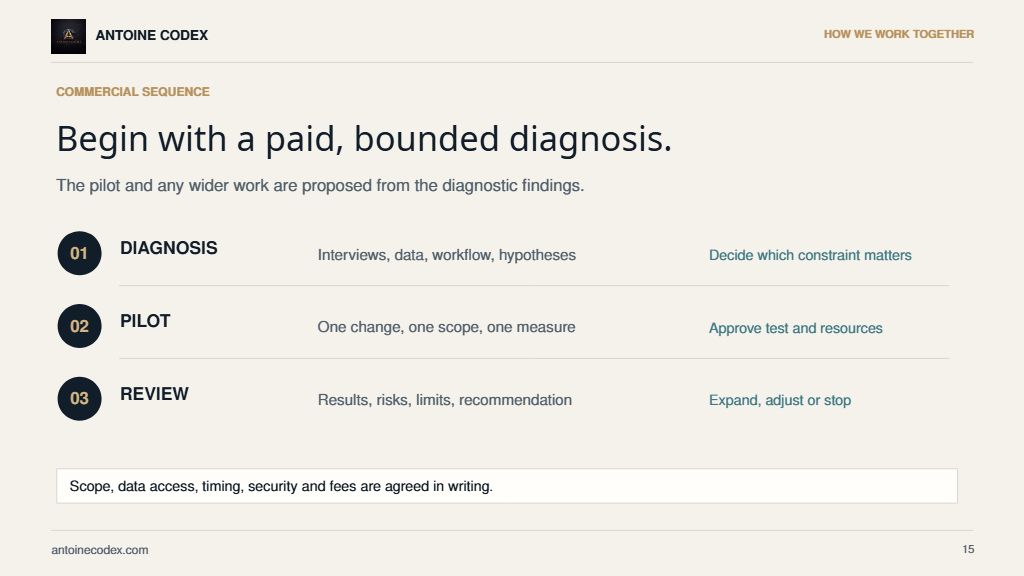
Each stage produces a visible output before more resources are committed.
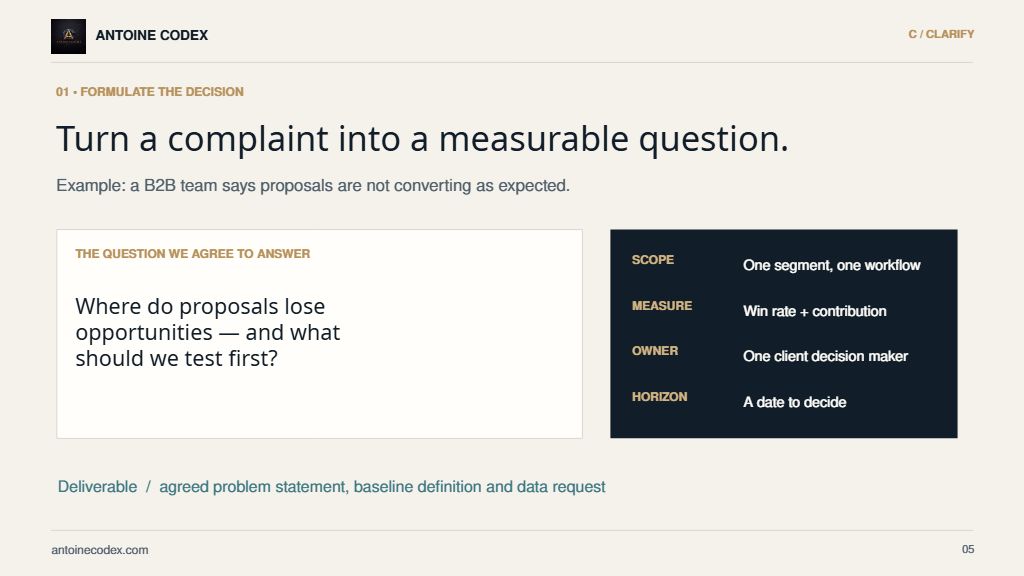
Turn a complaint into a measurable question: one scope, one measure, one owner and a date to decide.
Output Problem brief
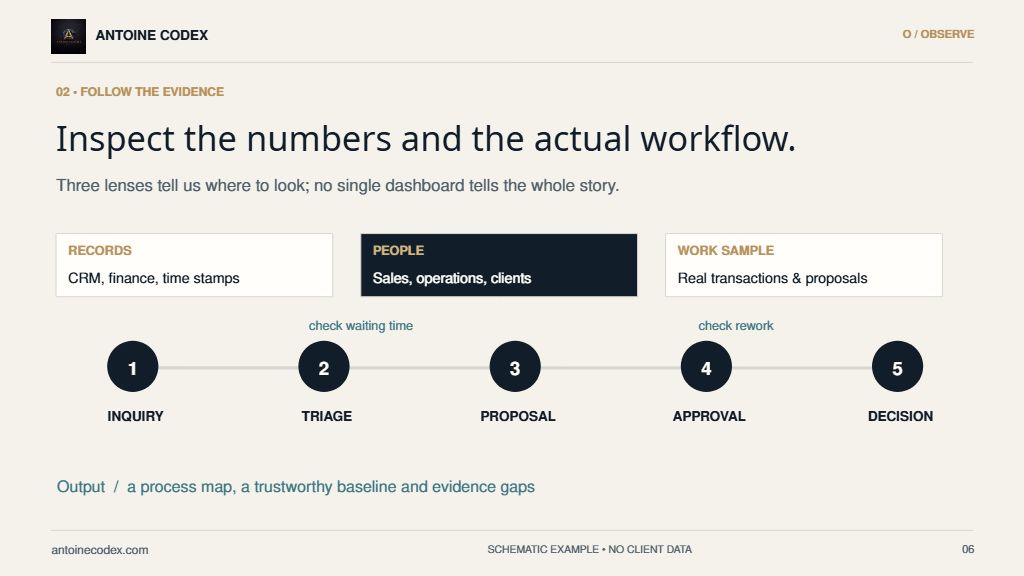
Inspect the numbers and the actual workflow through three lenses: records (CRM, finance, time stamps), people (sales, operations, clients) and real work samples.
Output Process map
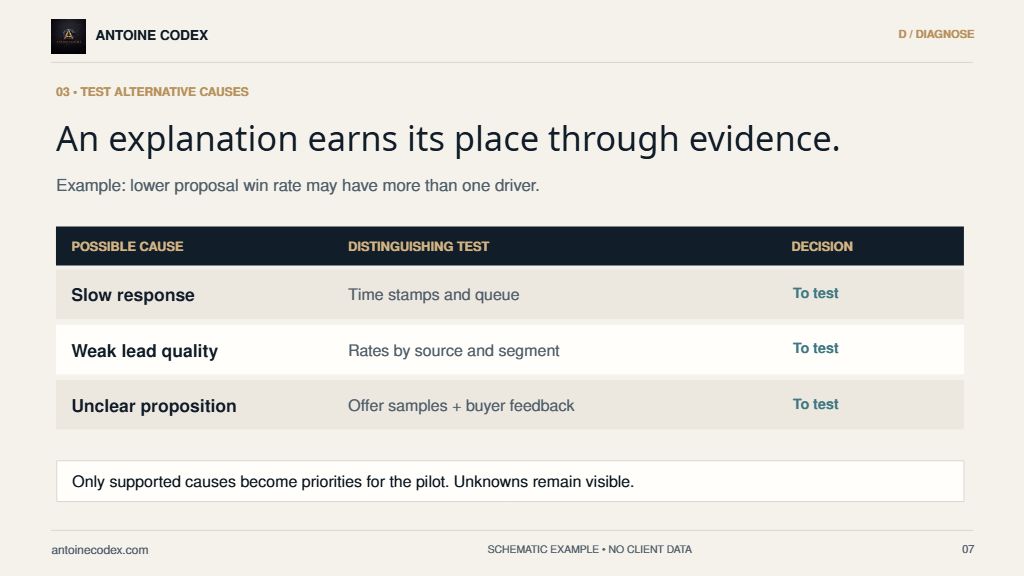
An explanation earns its place through evidence: each possible cause faces a distinguishing test. Only supported causes move forward; unknowns stay visible.
Output Ranked priorities
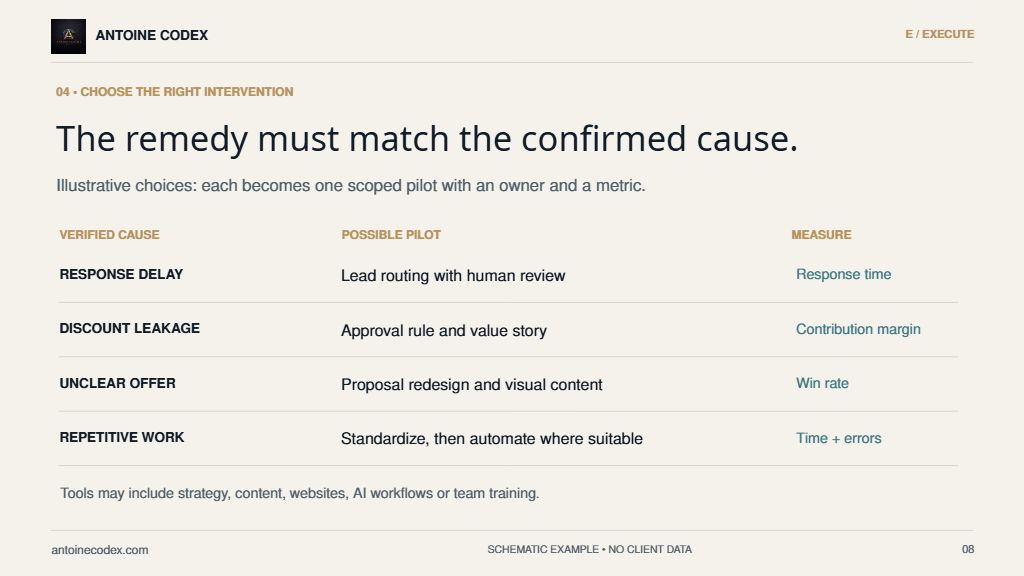
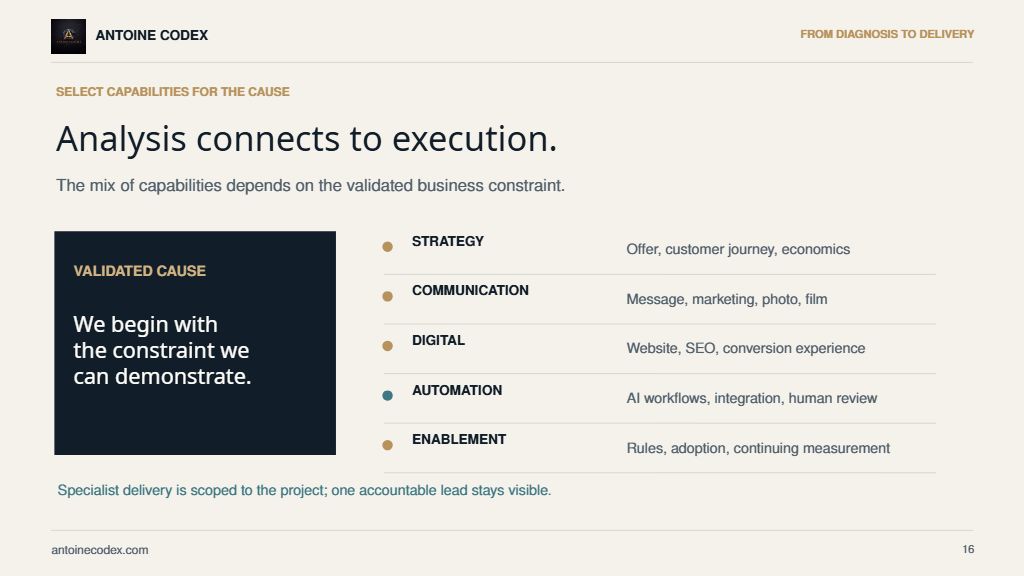
The remedy must match the confirmed cause: one scoped pilot, with an owner and a metric, before any wider roll-out.
Output Implementation plan
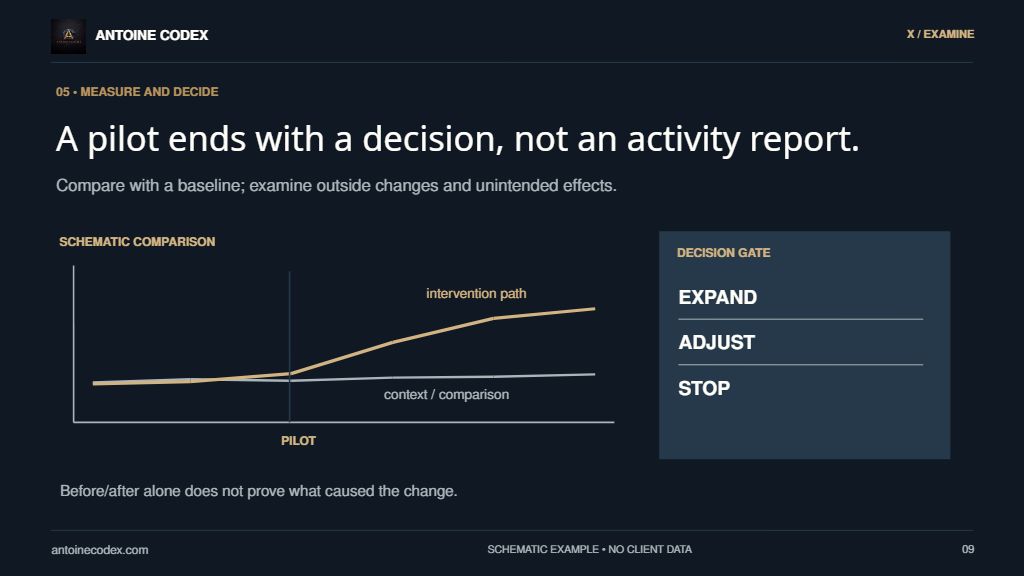
Compare with the baseline, account for outside changes and unintended effects, then decide: expand, adjust or stop.
Output Review memo
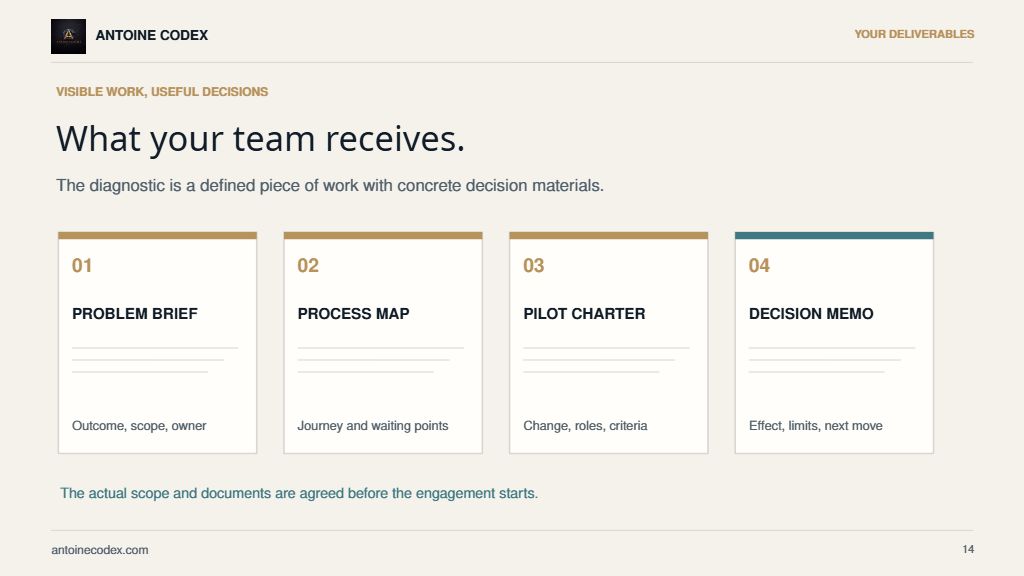
The diagnostic is a defined piece of work with concrete decision materials.
A paid engagement, quoted individually: the actual scope and documents are agreed before it starts.
The problem framed as one measurable question, with its scope and its owner.
Your starting point, measured from your records and the real workflow before anything changes.
Verified causes, ranked and argued; whatever remains uncertain is clearly flagged.
A scoped pilot: the change to test, the roles, the timing and the resources.
The measure that will tell you, once the test ends, whether to expand, adjust or stop.
Two online tools, available at any time: the Quick Business Assessment questionnaire and the AI assistant ("In-depth AI business assessment"). They help you take a first look at your situation, based on your answers.
This initial analysis is based on your answers. It does not replace an in-depth assessment carried out with you and based on your business's actual data.
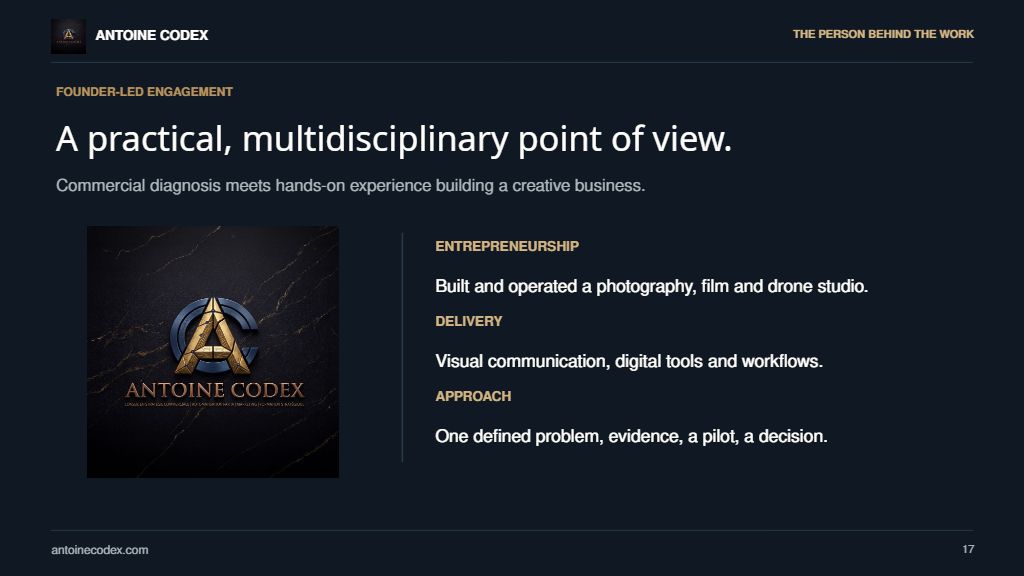
The method described on this page and in the presentation below. It is carried out by an ANTOINE CODEX team, supervised by Antoine: remotely, on site, or a combination of both, depending on your location and the terms agreed.
It is for business leaders who want an analytical, in-depth review, based on their data and on the real work of their teams.
Schematic examples • no client data
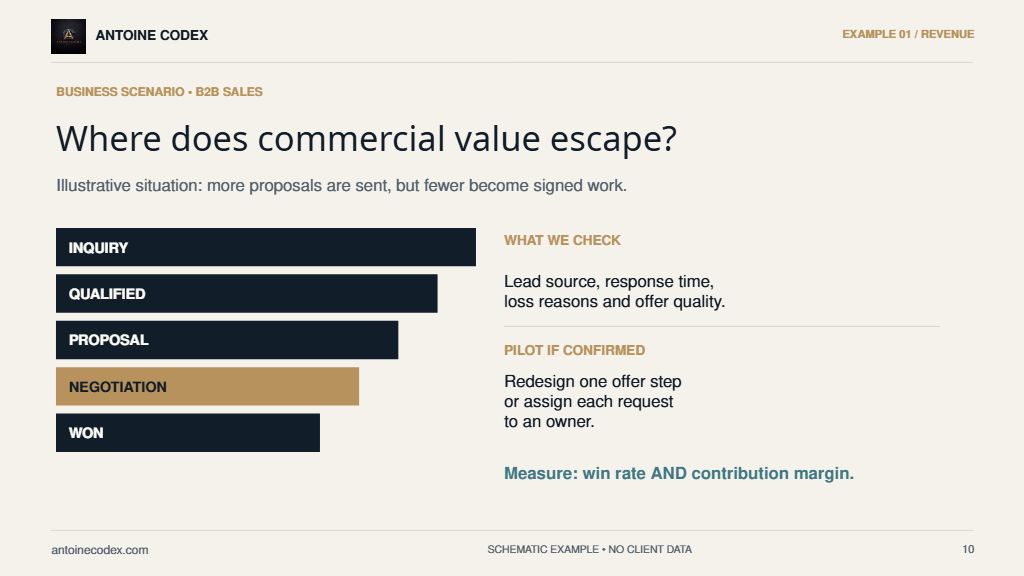
Revenue B2B sales
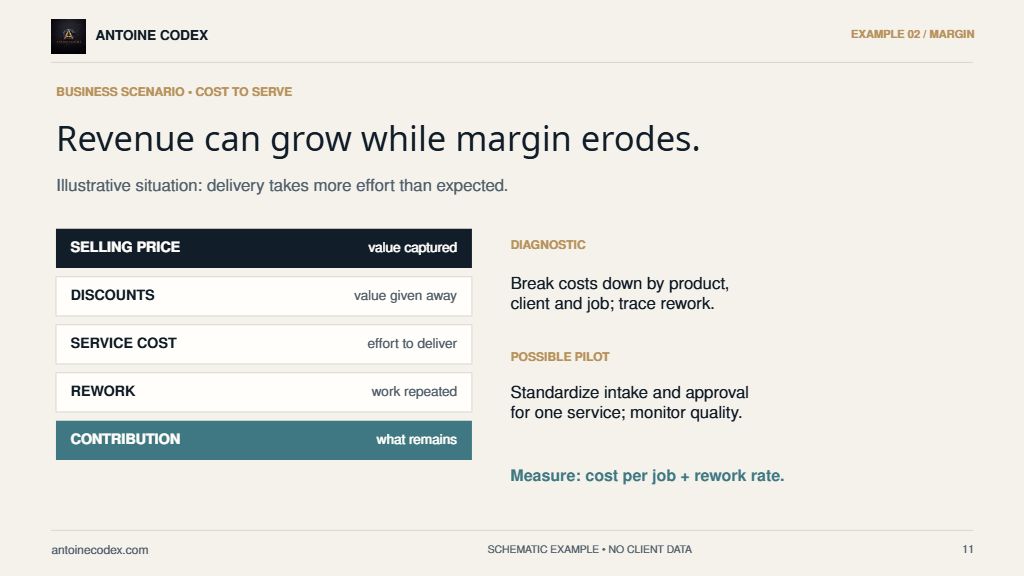
Margin Cost to serve
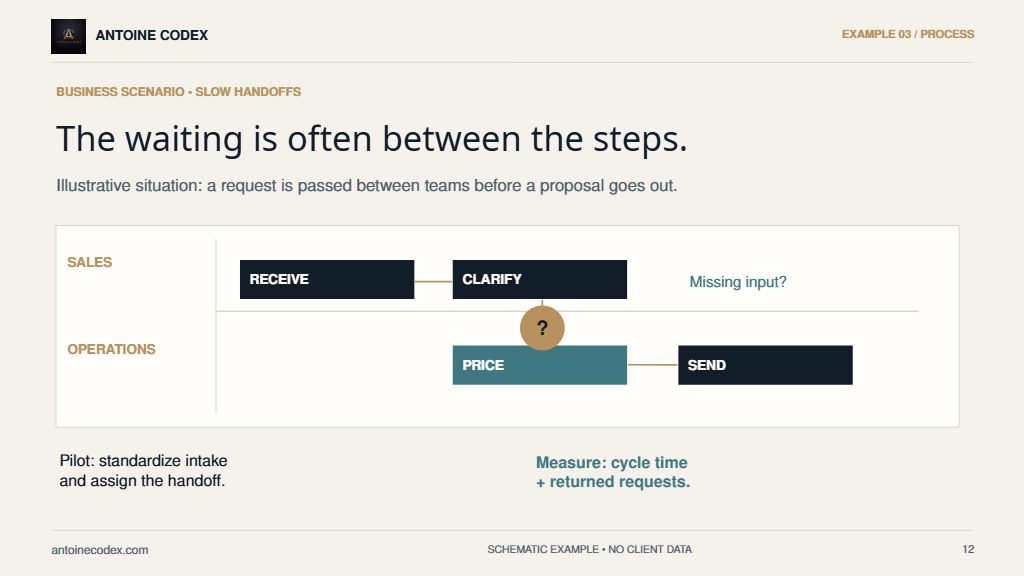
Process Slow handoffs
Illustrative situations, shown to explain the approach: they are not client case studies, and no result is claimed.
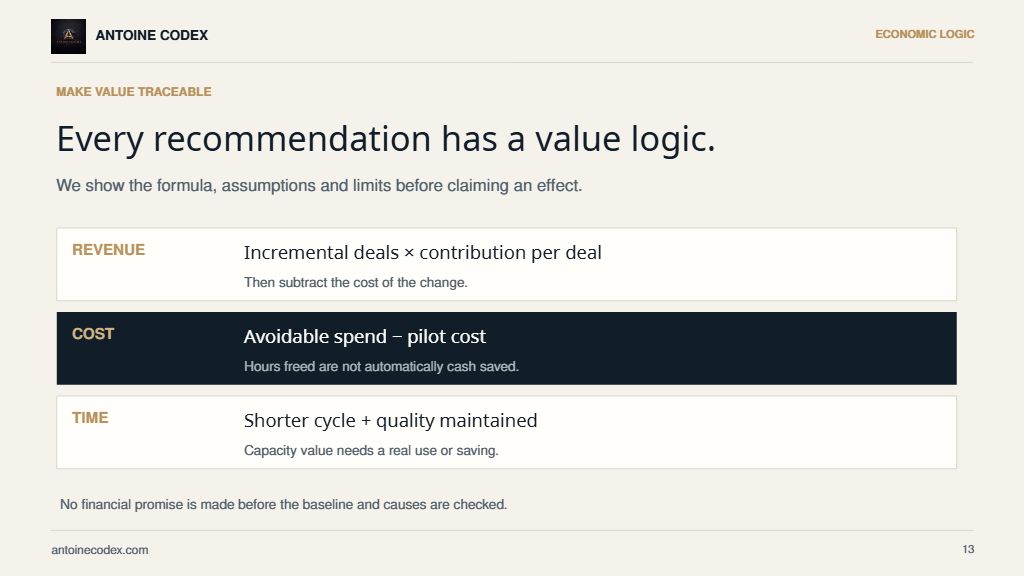
The five stages, the schematic examples, the economic logic and how an engagement runs — in 18 pages to scroll through.



Request a first conversation about your situation, by video call or in person, along with a quote for an in-depth diagnosis carried out by an ANTOINE CODEX team, supervised by Antoine.
Or by email: contact@antoinecodex.com